
Why is it recommended that training institutions provide good post class reviews

The advantages of post class reviews
1、 Core Communication Concept: Establishing an "Alliance" Relationship
Before engaging in specific communication, please establish a core mindset: coaches and parents are an "educational alliance" with the same goal of jointly promoting children's development. Communication is not a one-way 'report', but a two-way 'exchange'.

2、 Elements and key points of post class feedback
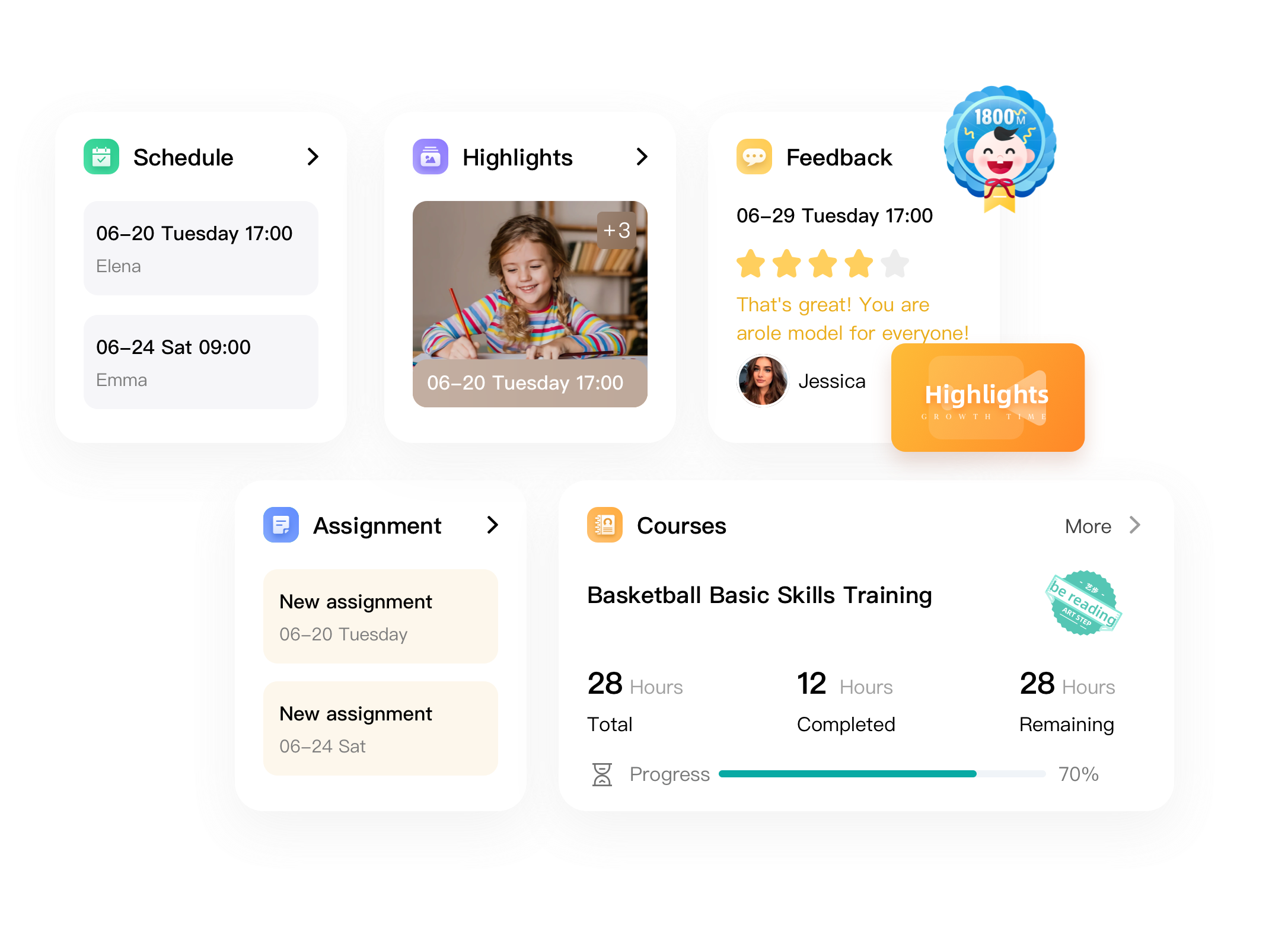
A professional, clear, and warm post class feedback can make parents feel your dedication and professionalism. The suggestion includes the following four parts:
Part One: Overview of Classroom Performance (Giving an Overall Impression)
• Elements:
Today's training theme/objective: Clearly inform parents of the focus of this lesson, for example: "The focus of this lesson is to improve children's attention stability and physical coordination through vestibular and tactile stimulation
Overall state of the child: describe the child's emotions and level of participation, such as "Today the child is full of emotions and has a high level of participation throughout the whole process" or "At the beginning, there were some difficulties, but with encouragement, they quickly entered the state".
• Key points:
Firstly, affirm the child's efforts and progress, allowing parents to receive information in a joyful mood.
Linking the state description with the training objectives to help parents understand the impact of the state on training.
Part 2: Highlights and Progress (Specific Description, Giving Confidence)
• Elements:
Specific behavior: Describe specific examples of children doing well, avoiding vague "great".
Comparison with the past: Point out the progress compared to the last class or early stage.
Interpreting the ability behind behavior: telling parents what ability this behavior means has been improved.
• Key points:
The "behavior + ability" mode: We observed that the child remained focused for X minutes (behavior) during the XX activity today, indicating a significant improvement in their attention stability (ability). ”This sentence structure.
Let progress be seen: Even small progress should be clearly stated as the driving force for parents to persist.
Part Three: Challenges Encountered and Our Support (Show Professionalism, Not "Complaints")
• Elements:
Specific situation: objectively describe where and what tasks the child encountered difficulties in.
Child's reaction: Describe the child's specific behavior (such as "when walking on the balance beam, he appears very nervous and tries to give up multiple times").
Coach's coping strategy: Emphasize how you guided and helped the child (such as "We helped him successfully complete two tasks by reducing difficulty, encouraging him with language, and providing physical assistance").
• Key points:
O Regarding the matter, not the person: describe the behavior, rather than labeling the child (not saying 'he has poor balance', but saying 'this task is a challenge to his balance').
Emphasize the solution: let parents know that you have professional coping methods, rather than simply throwing the problem to them. This can greatly alleviate parents' anxiety.
Part Four: Family Extension Suggestions (Extending the Effect to Life)
• Elements:
1-2 simple and easy to implement activities: The recommended games or activities should be relevant to the training objectives of this lesson and easy to operate at home.
Clear purpose: Tell parents which skills this activity is aimed at developing.
Reminder: Emphasize the importance of "combining education with entertainment" to avoid burdening parents.
• Key points:
Personalization: It is recommended to focus on the weak points or strengths that the child needs to consolidate in this lesson
Operability: For example, "This week, you can play the 'little airplane' game at home (parents can lie flat, bend their knees, and have their children lie prone on your calves) for 5-10 minutes every day. This is a great vestibular stimulation that can help children improve their attention
Encourage rather than force: Use words such as' can try 'and' suggest playing '
3、 Key points of phased communication (such as monthly/quarterly summaries)
In addition to feedback from each class, regular periodic communication is more important.
Review and Summary: Compare the child's early and current performance during training, and use data or specific examples to demonstrate overall progress.
Evaluate the training plan: Based on the child's progress, communicate with parents to adjust the training plan for the next stage.
• Gain a deeper understanding of children: Ask parents about the changes they observe at home and school, listen to their confusion and needs.
Joint development plan: Upgrade family training recommendations to a more systematic 'family support plan', forming a collaborative effort for home school education.
General skills and taboos in communication
【 Bonus Points Techniques 】
1. Use "us" more often: "Let's find a solution together", "We can try this way next", to strengthen the sense of alliance.
2. Make good use of visualization tools: take photos or short videos (with consent) to record the child's exciting moments or training process, and provide feedback with pictures and text to make it more convincing.
3. Listening and Empathy: Give parents the opportunity to express themselves, understand their anxiety and efforts.
4. Maintain positivity and patience: The effectiveness of sensory integration training takes time, and your confidence is a reassurance pill for parents.
[Forbidden Red Line]
1. Avoid discussing their "issues" in public or in front of children: protect the dignity of both children and parents.
2. Avoid using too many professional terms: explain phenomena and principles in language that parents can understand.
3. Avoid exaggerating effects or making unrealistic promises: Maintain professionalism and integrity.
4. Avoid comparing children horizontally with other children: only make vertical comparisons of the child themselves.
In summary, excellent communication=professionalism (objective facts + scientific interpretation)+empathy (understanding parents)+cooperation (providing solutions + forming alliances). When parents not only see changes in their children through your feedback, but also learn methods to guide them, you truly become an indispensable partner in their parenting journey.